Pages

Translate

Search This Blog

Showing posts with label Karnataka. Show all posts

Monday, February 27, 2017

Karanji Lake Mysuru

Karanji Lake Mysuru


Picturesquely located at the foot of Chamundi hills and adjascent to the Mysuru Zoo, the Karanji lake is a beautiful bird sanctuary in the heart of Mysuru City which provides a wonderful habitat for more than 70 different species of avifauna. The recently re-developed lake, spanning across 90 acres has a butterfly park, boating, children's corner, a watch tower and India's largest walkthrough aviary.
 Timings : 08.30 am to 05.30 pm Except on Tuesdays. Entrance fee
 Adult : Rs. 10, Children(5-10 yrs.) : Rs. 5

 Phone: 0821-2439862

Saturday, February 25, 2017

Somanathapuram Temple mysore

Somanathapuram Temple mysore


Situated in the unobtrusive village of Somanathpur, 35km from Mysuru, the exquisitely carved, star-shaped temple with triple towers is a perfect example of Hoysala architecture.  The friezes on its outer walls with their intricately cared rows of caparisoned elephants, charging horsemen, and mythological birds and beasts will leave you spellbound. Beautifully sculpted images of gods, godesses and scenes from the epics, as well as the remarkable ornate celings in the pillared hall take your breath away.


  • Timings: 9.00 am to 5.30 pm.
  •  
  • Entrance Fee: Indians Rs.5, Child below 12 Yrs. Free, Foreigners Rs.100.
  •  
  • Distance: Mysuru-35km, T.Narasipura – 10km, Maddur -60km, Bangalore -120km.
  •  
  • Phone: 08227-270010

Friday, February 24, 2017

Ranganathittu Bird Sanctuary

Ranganathittu Bird Sanctuary


just outside Srirangapatna, 4th from Srirangapatna, near Mysuru, the Cauvery river meanders around a string of tiny nesting sites of waterfowls.  Experiences the excitement of a boat ride that takes you within touching distance of the birds as marsh crocodiles bask in the sun.  Delight watching the winged visitors making happy forays into the water.  You could also you’re your powers of observation by trying to spot flying branches of the tallest trees at dusk.
Best season: Jan to Sept

 Flora and Fauna       

River in the forest as well as some deciduous forests, bamboo, eucalyptus, figs, jamun and Karanji.  Mammals and Reptiles.  The flying fox, bonnet macaque, common otter, common mongoose, palm civet are some of the mammals and reptiles like marsh crocodile are found here.

Birds

Bird life includes the little cormorant, large cormorand, darter, white ibis, spoonbill, open-billed stork, painted stork, egret, heron, river term, great stone plover, kingfisher, Indian cliff swallow, and the lesser whistling teal.
 Timings: 8.30 am to 6.00 pm.
Entrance: Rs.20 for Indians, Rs. 60 for Foreigners

Distance: Mysuru -19km, Bangalore -128km.

Thursday, February 23, 2017

Jaganmohan Palace mysore

Jaganmohan Palace


This Art Gallery located to the west with a walking distance to that of main palace, which is famous Art Gallery. It was built during rule of Krishnaraja Wodeyar III in 1861 to celebrate the marriage of his daughter, the princess of  Mysuru, because the main palace was destroyed in a fire in 1897. The main door of this Museum is it self a master piece of Art with intricate carvings which is said to have been made in just 70 days. The museum was officially started in 1915, and has since been expended adding many artifacts. This Art Gallery was linded to the famous Mysuru style of painting of rare original paintings and artiacts and entrusted the Administration of this Museum to a committee. The museum was named after sri Jayachamrajendra Wodeyar in 1955 as Jaganmohn Palace Art Gallery.The original oil paintings of Raja Ravi Varma of Travancore on display here are on many mythological themes.The painting of lady holding the lamp of the Indian Artist S.G.Heldnker is another piece. The other Exhibits include Artifacts made from Glass, Ceramic and Metal.A good collection of clocks is on display here. Few energravings from china and Japan give it an oriental charm, painting on silks from Japan are worth seeing. Another attraction is the display of paintings of various styles like Moghal, Rajputh give the museum the Artistic touch. Innumerable toys and Artifacts of various description (like the French musical calendar and religious bells from Nepal) makes a visit to this museum memorable.

Timings: 8.30 am to 5.30 pm (Daily)

Entrance fee: Adults: Rs.20, Children(5- 10yrs):Rs.10/-

Wednesday, February 22, 2017

Lalitha Mahal Palace

Lalitha Mahal Palace


On a low hill, just outside the royal city of Mysore, stand a shimmering white palace - a splendid Italianate palazzo, double-columned and domed - set in sparawling terraced and landscaped gardens. This is the Lalitha Mahal Palace, built by the erstwhile Maharaja of Mysore to host his most important guest, the Viceroy of India.

The Lalitha Mahal is now one of India's most opulent hotels, a palace hotel that offers an experience of princely living in a real Maharaja's palace.


Set on a ridge commanding a panoramic view of the gently sloping and curving valley, at the foot of the Chamundi hill, this dream-like palace was built in the year 1931 for special guests of the Maharajas. The building is a majestic, two-storey composition of twin ionic columns, a projecting porch on the ground floor, spherical domes with laterns and the central dome which dominates the elevation.

Tuesday, February 21, 2017

Nanjangud Temple

Nanjangud Temple


Nanjangud ( Kannada: ನಂಜನಗೂಡು ) is a town in Mysore district in the Indian state of Karnataka. Nanjangud lies on the banks of the river Kapila (Kabini), 23 km from the city of Mysore. Nanjangud is famous for Srikanteshwara Temple. Nanjangud is also called "Dakshina Kashi" (southern Kashi). This city is also famous for a variety of banana grown in the region, the Nanjanagoodu rasabale.

Railway Museum Mysore

Railway Museum Mysore


The Railway Museum at Mysore, India is an outdoor exhibit of vintage locomotives.

The Railway Museum was established in 1979 by Indian Railways, the second such museum after the National Railway Museum in Delhi. The museum is opposite the Central Food Technology and Research Institute on Krishnaraja Sagar Road. It has locomotives and a gallery of photographs and paintings depicting the growth of railways in India. Railway signals and lights are also displayed. The museum has a battery-operated mini-train giving a short ride for children on the grounds.

Monday, February 20, 2017

Brindavan Garden (KRS-Krishna Raja Sagar)

Brindavan Garden (KRS-Krishna Raja Sagar)


The Krishnaraja Sagar reservoir across the legendary Cauvery River is round 18km north-west of Mysuru.  The Brindavan Gardens are located just a level below the dam.Often described as the best example of illuminated terrace gardens in the country, the idea was brainchild of Sir M.Visveshwaraiah and Sir Mirza M ismail, former Devans of Mysuru.  The overall design here displays an orientation of Mughal patterns-with garden paths and a shimmering necklace of fountains.On the South bank there is a pavilion, where visitors can get a breathtaking view of the gardens.  Other highlights at the gardens include a children’s park, a fisheries station and a hydraulic research station.  Adding a touch of sanctity to the place is a beautiful sculpture of Goddess Cauvery at the foot of the dam.

Garden Timings:

 All Week Days: 6.00am to 8.00pm

Music Fountain Show:

 All Week Days: 6.30pm to 7.30pm

Saturdays and Sundays: 6.30pm to 8.30pm


Admission Fee: Adult Rs. 15, Children (5 to 10 yrs.) Rs.5

Sunday, February 19, 2017

St. Philomena's Church

St. Philomena's Church


This Roman Catholic Church was built in AD 1840.  It was initially known as St. Joseph Chaver which later assumed the present name. The twin towers of the church stand majestically at 175 feet, the design is gothic and it is said to resemble the St. Patrick’s cathedral at New York and a church at Cologne.  The church is located about I km from Mysuru Palace on the Bangalore highway.  The then king of Mysuru Krishnaraja Wodeyar IV laid the foundation for construction of the church in 1933.  It has been designed a French Architect.The stained glass windows, made in France, overlooking the apse, showing the Birth of Christ, Baptism of Christ by St.John the last supper and the crucifixion of Christ are works of art.  The altar bears the statue of St.Philomina a 3rd century saint from Greece.  This church is considered to be the most beautiful in Karnataka. The church has a celler where there is a statue of St.Philomina was a holy saint during the 3rd ventury in Greece, in a reclining posture.  A piece of her bone and cloths are in this church.

Visiting hours: 5.00 am to 6.00 pm (all the days), Entry Free

mysore Zoo

mysore Zoo


Mysuru Zoo (Chamarajendra Zoological Garden) was started in 1892 by chamaraja Wodeyar X, then the king of Mysuru.  Initially as a private Zoo, and was named as Khas-Bangale.  It was also called as Thamash Bangle.  The Zoo which has now spread over an area of 250 acres was initially ment for the exclusive visit of the royal family but public entry started as early as 1920.  It is located inside the city unlike many other Zoos in India and Mysuru Zoo is considered to be one of the best in the world.

The Zoo has about 1500 animals, ranging from the opossum to orangutan.  This Zoo houses a wide range of animals.  Mysuru Zoo was the first in the country to obtain gorilla and penguin’s. Many animals which are imported from countries like Africa, America, and Australian countries under conservation project due to the successful breeding of the white tiger.  It is also credited with achieving considerable break-through in captive breeding of many animals.  elephants also breed well in captivity in this Zoo.

The Zoo has a small museum which exhibits the stuffed animals.  A small library is also located in the Zoo. Painting and essay competitions are periodically conducted by the zoo authority the children to create awareness and love in them for animals.

Ms.Sally Walker (USA) started the friends of Mysuru Zoo (FMZ) in 1980.  At present there is a scheme for ‘Adopting’ an animal. Which means you can take care of the feeding expenses of an animal for a certain of time.  Karanji Lake is a part of Mysuru Zoo.  The lake attracts about 45 varieties of birds; some of the birds migrate here from too far aways places. The lake has been renovated recently and boating facility is also available.

Visiting hours: 8.30 am to 5.30 pm    Ph.0821 - 2440752, 2520302

Entrance Fee:   Adults Rs.25/-Children(5-12 yrs) Rs.10/- , Tuesday holiday.

Chamundi Hills

Chamundi Hills


Chamundi Hills

The hill is 3,489ft. above the sea levels and is 12 km from Mysuru city. An energetic visitor will be well repaid by climbing up the 1000 steps, fashioned about 300 years ago, and a good motorable road leads to the top of the hill. The largest and the best know is the large Dravidian Temple, dedicates to Sri Chamundeshwari Devi, the tutelary deity of Mysuru and here royal house, generally regarded as an incarnation of Parvati or Durga. One account claims that the Goddess slew two demons, Chanda and Munda , so winning for herself a name combined of both. But the more usually accepts version speaks of here as Chamundi – Mahishasura – Mardini, the slayer of minotaur.

She is therefore the household deity of the town named in (Maheshaputra) commemoration Maisa(baffalo),uru(town) her image on the hill bestrides a lion, and has twenty hands. It is said that Raja Wodeyar (about 1600 AD) intended to build a gopura, and for that purpose erected four large pillar posts, which were removed when the present gopura was built by Krishnaraja Wodeyar III. He built a gopura with golden finials, and set up statues of himself and his 3 queens in the presence of the Goddess. In 1827 he made arrangement for festivals and processions.  In 143 he presented the simhavahana and other cars.

Darshan Timings:

7:30am to 2:00pm, 3:30pm to 6:00pm, 7:30pm to 9:00pm

THE SACRED BULL


Half a top of the hill you may reachthe bull in a few minutes. Fashioned says legend, in one night, out of the basalt of the hill, this recumbent colossal Nandi (the vehicle of Shiva) was a gift of Dodda Deva Raja. Over 25 ft long and 4.8 mt high (16ft high), adorned with ropes, chains, bells and jewels of stone, the bull with half shut eyes, which seem, in yogic fashion.

Maharaja's Palace

Maharaja's Palace


Designed by the English Architect, Henry Irwin, the Mysuru Palace dominates the skyline of Mysuru.  A three storied structure in the Indo-Saracenic style built between 1897-1912, the palace has beautifully designed square towers at cardinal points, covered with domes.  The Durbar Hall with its ornate ceiling and sculpted pillars and the Kalyanamantapa (Marriage Pavilion) with its glazed tiled flooring and stained glass, domed ceiling are worth noting.  Intricately carved doors, the golden howdah (elephant seat),paintings as well as the fabulous, jewel encrusted golden throne (displayed during Dasara) are amongst the palace's other treasures. The walled palace complex houses the Residential Museum (incorporating some of the Palace's living quarters),temples and shrines including the Shwetha Varahaswamy temple. The palace is illuminated on Sundays, Public Holidays as well as during the Dasara Celebrations when 97,000 electric bulbs are used to illuminate it.

Timings:10am to 5.30 pm daily,Illumination Sundays & Public Holidays :7pm-8pm


Entrance Fee: Adults : Rs. 20, Children(5-10 yrs.) : Rs. 10

mysore

mysore


Mysore(Listeni/maɪˈsʊər/), officially renamed as Mysuru, is the third most populous and also the third largest city in the state of Karnataka, India. Located at the base of the Chamundi Hills about 146 km (91 mi) southwest of the state capital Bengaluru, it is spread across an area of 128.42 km2 (50 sq mi). According to the provisional results of the 2011 national census of India, the population is 887,446. Mysore City Corporation is responsible for the civic administration of the city, which is also the headquarters of the Mysore district and the Mysore division.

Mysore served as the capital city of Kingdom of Mysore for nearly six centuries, from 1399 until 1947. The Kingdom was ruled by the Wodeyar dynasty, except for a brief period in the late 18th century when Hyder Ali and Tipu Sultan were in power. Patrons of art and culture, the Wodeyars contributed significantly to the cultural growth of the city. The cultural ambiance and achievements of Mysore earned it the sobriquet Cultural capital of Karnataka.

Mysuru is noted for its palaces, including the Mysore Palace, and for the festivities that take place during the Dasara festival when the city receives a large number of tourists. It lends its name to the Mysore style of painting, the sweet dish Mysore Pak, the Mysore Peta (a traditional silk turban) and the garment known as the Mysore silk saree. Tourism is the major industry alongside the traditional industries. Mysore depends on rail and bus transport for inter-city connections.[citation needed] The city was the location of the first private radio station in India. Mysore houses Mysore University, which has produced several notable authors, particularly in the field of Kannada literature. Cricket and lawn tennis are the most popular sports in the city.

mysore tourist places

  1. Maharaja's Palace
  2. Chamundi Hills
  3. Mysore Zoo
  4. St. Philomena's Church
  5. Brindavan Garden (KRS-Krishna Raja Sagar)
  6. Rail Museum
  7. Jaganmohan Palace
  8. Ranganathittu Bird Sanctuary
  9. Somanathapuram Temple mysore
  10. Karanji Lake Mysuru
  11. Kukkarahalli Lake
  12. Bandipur National park
  13. Lalitha Mahal
  14. Nanjangud Temple

Saturday, December 13, 2014

KUDREMUKH


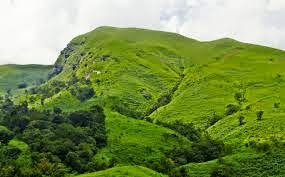
Kudremukh also spelled Kuduremukha is a mountain range and name of a peak located in Chikkamagaluru district, in KarnatakaIndia. It is also the name of a small hill station cum mining town situated near the mountain, about 48 kilometres from Karkala and around 20 kilometres from Kalasa. The name Kuduremukha literally means 'horse-face' (in the Kannada language) and refers to a particular picturesque view of a side of the mountain that resembles a horse's face. It was also referred to as 'Samseparvata', historically since it was approached from Samse village. Kuduremukh is Karnataka's 3rd highest peak after Mullayangiri and Baba Budangiri. The nearest airport is Mangalore International Airport at Mangalore which is at distance of 130 kilometres.

Ecology


     The wet climate and the tremendous water retentive capacity of the shola grasslands and forests have led to the formation of thousands of perennial streams in the region converging to form three major rivers of the region A diverse assemblage of endangered large mammals is found in the park supporting three large mammal predator species such as the TigerLeopard and Wild Dog. The important Tiger prey base found within the Park is GaurSambarWild PigMuntjacChevrotainBonnet Macaque, Common Langur and the Lion-tailed Macaque

Location

     The Kudremukh National Park (latitude 13°01'00" to 13°29'17" N, longitude 75°00'55' to 75°25'00" E) is the second largest Wildlife Protected Area belonging to a tropical wet evergreen type of forest in the Western Ghats. Kudremukh National Park is located in Dakshina KannadaUdupi District and Chikkamagaluru districts of the State of Karnataka. The Western Ghats is one of the thirty four hotspots identified for bio-diversity conservation in the world. Kudremukh National Park comes under the Global Tiger Conservation Priority-I, under the format developed jointly by the Wildlife Conservation Society (WCS) and World Wide Fund-USA...

History

     Well known environmentalist and Tiger expert Dr. Ullas Karanth, undertook a detailed and systematic survey of the distribution of the endangered Lion-tailed Macaque in Karnataka during 1983-84 with support from the Government of Karnataka. He observed that suitable and extensive rain forest habitat for the Lion-tailed Macaque existed in Kudremukh and that the tract probably harboured the largest contiguous population of Lion-tailed Macaques in the Western Ghats, outside the Malabar region. He further suggested that Lion-tailed Macaques could be effectively used as a 'flagship' species to conserve the entire biotic community in the region and prepared a conservation plan for the survival of wild populations of Lion-tailed Macaques in the region delineating the present national park area as a proposed nature reserve. Based on his report, the Karnataka State Wildlife Advisory Board suggested to the Government that Kudremukh National Park be created. Subsequently, in 1987, the Government of Karnataka declared these Reserved Forests as a National Park based on the above suggestion.

     Kudremukh National Park is spread partly over the thick hilly forests near the coastal plains on the western portion and the shola vegetation on the Western Ghats uplands, covering parts of three districts, viz., Chickmagalur, Udupi and Dakshina Kannada. The Kudremukh peak, by which the national park derives its name, is the highest spot at 1892 meters. The hills, which bear the brunt of the severe monsoon winds, preclude any tree growth added to that the region is known for its rich low grade magnetite soil which primarily inhibits plant growth. As a result, the landscape is covered with grass. The valleys which are tucked in, have reasonable protection from wind and a deep soil profile, as a result of which stunted evergreen forests exist creating a unique micro climate, rich with mosses, orchids, etc. The whole scenery of grassland interspersed with narrow strips of forests provides a fantastic vista..

     Three important rivers, the Tunga, the Bhadra and the Nethravathi are said to have their origin here. A shrine of goddess Bhagavathi and a Varaha image, 1.8 m within a cave are the main attractions. The Tunga River and Bhadra River flow freely through the parklands..


Friday, October 24, 2014

VIRUPAKSHA TEMPLE

Virupaksha Temple Is located in Hampi  350 km from Bangalore, in the state of Karnataka in southern India. It is part of the Group of Monuments at Hampi, designated a UNESCO World Heritage Site. Virupaksha is a form of Shiva and has other temples dedicated to him, notably at the Group of Monuments at Pattadakal, another World Heritage Site.
Hampi sits on the banks of the Tungabhadra River in the ruins of the ancient city of Vijayanagar, capital of the Vijayanagara empire. Virupaksha Temple is the main center of pilgrimage at Hampi and has been considered the most sacred sanctuary over the cenituries. It is fully intact among the surrounding ruins and is still used in worship. The temple is dedicated to Lord Shiva, known here as Virupaksha, as the consort of the local goddess Pampa who is associated with the Tungabhadra River. There is also a powerful Virupakshini amma temple (mother goddess) in a village called Nalagamapalle, Chittoor district, Andhra Pradesh, approximately 100 km from Tirupati.

HISTORY

The temple's history is uninterrupted from about the 7th century. The Virupaksha-Pampa sanctuary existed well before the Vijayanagara capital was located here. Inscriptions referring to Shiva date back to the 9th and 10th centuries. What started as a small shrine grew into a large complex under the Vijayanagara rulers. Evidence indicates there were additions made to the temple in the late Chalukyan and Hoysala periods, though most of the temple buildings are attributed to the Vijayanagar period.
Under the Vijayanagara rulers, in the middle of the 14th century, there began a flowering of native art and culture. When the rulers were defeated by invaders in the 16th century, most of the wonderful decorative structures and creations were systematically destroyed.
The cult of Virupaksha-Pampa did not end with the destruction of the city in 1565. Worship there has persisted throughout the years. At the beginning of the 19th century there were major renovations and additions, which included ceiling paintings and the towers of the north and east gopura.

ARCHITECTURE

The progressively diminishing superstructure is made with brick and mortar. All around the exterior of the first tier spots many interesting stucco figures. You may get to some distance from the base of the tower to see all of them.The original worship place was only a few separate humble shrines (believed to be as old as 7th century) housing the image of the god and the goddesses. Over the centuries the temple gradually expanded into a sprawling complex with many sub shrines, pillared halls, flag posts, lamp posts, towered gateways and even a large temple kitchen. You access the temples main entrance tower through the chariot street in front now popularly called the Hampi Bazaar.


This east facing giant tower (Gopura) leads you the first courtyard of the temple complex. This pastel painted 9 storied tower with a pair of cow horn like projections on top is the most prominent landmark in Hampi. The lower two tiers of the tower is made of decorated stone work.


FESTIVAL

The temple continues to prosper and attracts huge crowds for the betrothal and marriage festivities of Virupaksha and Pampa in December.
In the month of February the annual chariot festival is celebrated here.